The short answer
Subscribe & Save is 5% on eligible products, plus an additional tiered discount when you have 5 or more subscriptions arriving on the same day to the same address. Restock is a different product entirely: four managed services, priced on the number of sites, available in select U.S. cities, arranged through an account executive.
Search results merge these two because both involve items arriving repeatedly without anyone ordering them. Operationally they could hardly be less alike. One is a checkbox on a product page. The other is a procurement contract.
Subscribe & Save: the mechanics worth optimizing
The Amazon Business Pricing Policy states it plainly: Subscribe & Save offers a 5% discount on eligible products and an additional tiered discount when you have 5 or more subscriptions arriving on the same day to the same address. It adds that Subscribe & Save discounts apply to Subscribe & Save orders only.
Amazon's bulk buying page describes the combined outcome as "save up to 15% with Subscribe & Save for your frequently purchased products".
Three conditions do all the work, and they are the reason most businesses leave money on the table:
- 5 or more subscriptions. Four does not reach the uplift. Five does.
- Same day. Subscriptions scattered across the month earn the base rate only.
- Same address. Splitting deliveries between two sites splits the count.
So the optimization is obvious once stated: consolidate your recurring consumables onto one delivery day, at one address, and get the count to at least 5. For a typical office that is easy — paper, coffee, cleaning supplies, hand soap and bin liners is five before you have thought hard about it.
Pairing it with Amazon Day
If you hold a Business Prime membership, Amazon Day is the natural companion, because it is the same idea applied to your one-off orders. Amazon states members can select up to two weekdays to receive eligible shipments, and separately that members can earn 1% back in rewards on the value of eligible orders when choosing Amazon Day delivery.
Combined, the pattern is: one or two delivery days a week, subscriptions landing on the same day, fewer parcels to sign for, and a better effective rate. See Business Prime shipping and delivery and Prime Business Rewards.
Where Subscribe & Save sits against the other discounts
It is one of four mechanisms, and it stacks differently from the others because it is time-based rather than volume-based:
- Business-only pricing — per item, no threshold.
- Quantity discounts — from as low as 2 units on eligible items.
- Subscribe & Save — recurring, with the same-day same-address uplift.
- Request for Quote — single-SKU purchases over $10,000 or 999 units.
Full comparison on bulk buying and quantity discounts.
Amazon Business Restock: a different order of magnitude
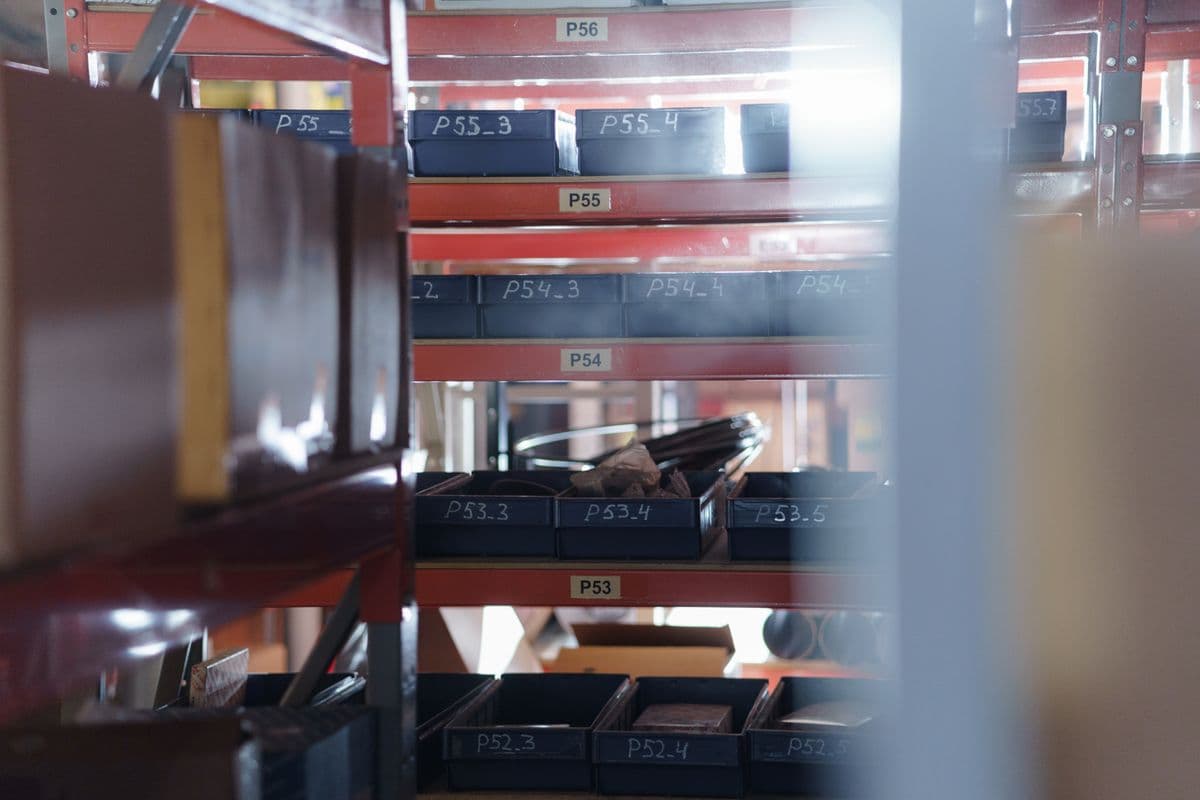
Restock is not a discount. Amazon describes it as automatically restocking items your business needs, saving time and money, offloading inventory management and increasing spend visibility. Four services:
| Service | What Amazon says it does |
|---|---|
| Managed Inventory | Amazon monitors, reorders and restocks products at specific locations. |
| Vending | Control distribution through per-user quantity limits while Amazon manages restocking. |
| Lockers: Returns | Control distribution of large or high-value items with employee badging. |
| Lockers: Disposables | Manage large or single-use items with Amazon monitoring levels. |
Three things to know before you get interested:
- It is geographically limited. Amazon states the service is available in select U.S. cities.
- It is priced per site. Amazon states Restock subscription prices depend on the number of sites serviced. There is no public price list, and we are not going to guess at one.
- It is a sales conversation. Amazon directs customers to contact their Amazon Business Account Executive to explore availability and options.
Vending in particular is the interesting one for anyone currently running a physical stores cupboard. Controlling distribution through per-user quantity limits is exactly the problem a locked cupboard and a sign-out sheet solves badly, and it is why Amazon positions it at manufacturing and industrial sites — see manufacturing and industrial.
Which one you actually need
| If this is you | Use |
|---|---|
| One site, predictable consumables, someone signs for parcels | Subscribe & Save, consolidated onto one day |
| Several sites, still predictable | Subscribe & Save per address, plus shared addresses to keep control |
| Staff take supplies from a store, consumption is uneven | Restock — Vending or Managed Inventory, if you are in a served city |
| High-value tools walking out of the building | Restock — Lockers: Returns, with employee badging |
For multi-site setups, get the address structure right first, because both mechanisms depend on it — multiple shipping addresses. And if the underlying problem is people ordering the wrong things rather than ordering too often, the answer is a control rather than a schedule — Guided Buying and purchasing policies.
Bulk & Business is independent and not operated by Amazon. Links to Amazon on this page are affiliate links — we may earn a commission if you sign up, at no cost to you, and it never changes what we recommend. Full disclosure.
Plans and prices verified against Amazon on August 11, 2026. How we check.